
Trauma management
Regulate. Process. New Patterns.
Do you feel constantly on edge, easily overwhelmed, or unable to fully relax?
Panic attacks, anxiety, sleep difficulties, emotional nu mbness, anger or feeling disconnected?
What is Trauma?
Trauma can develop when an experience feels overwhelming, threatening, or impossible to process at the time. It can result from a single event, such as an accident, abuse, violence, or loss, but also from repeated experiences such as neglect, bullying, difficult relationships, chronic stress, or growing up in an unpredictable environment. What feels traumatic is not always obvious from the outside — it is the impact the experience has on the person that matters..
During a traumatic experience, the nervous system activates to protect us. The body may enter fight, flight, freeze, or shutdown, preparing us to survive what is happening. When the experience is over, the nervous system can gradually return to a sense of safety. But sometimes this does not happen fully, and the body can remain more easily activated or alert, even when we are no longer in danger.
When Trauma Remains Unprocessed
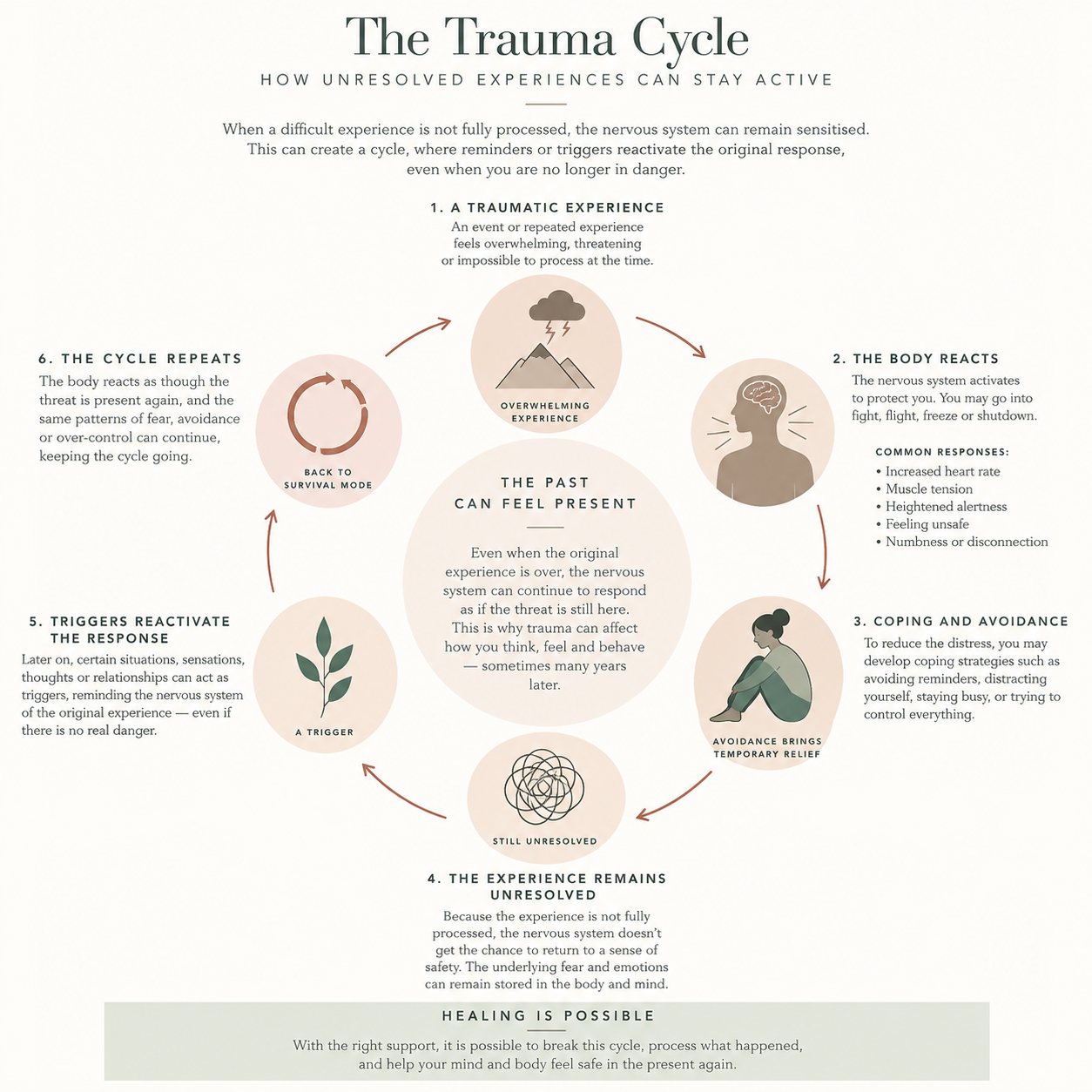
When traumatic experiences are not fully processed, they can continue to influence how we think, feel, behave, and relate to others — sometimes years later. This can show up as anxiety, panic attacks, hypervigilance, sleep difficulties, emotional numbness, feeling disconnected, or developing over-controlling patterns such as perfectionism, excessive planning, difficulty letting go, or needing to stay in control. Working through trauma can help the mind and body make sense of what happened, develop greater flexibility and regulation, and reduce the hold these experiences have on everyday life..
Finding What Works for You
-
Depending on your needs and goals, I draw from a range of evidence-informed psychological approaches:
Cognitive Behavioural Techniques (CBT) – exploring how thoughts, emotions and behaviours influence one another, and developing more helpful ways of responding.
Trauma-Informed Approaches – understanding how past experiences can influence the nervous system, emotions, behaviours and relationships, while prioritising safety and regulation.
Attachment-Informed Work – exploring how early and current relationships can shape the way we connect, communicate, trust and respond to others.
Psychoeducation – understanding what is happening in your mind and body can be an important first step towards change.
Emotion Regulation – developing awareness of emotions and learning ways to manage intense or difficult emotional states.
Mindfulness & Grounding – developing tools to reconnect with the present moment and create greater calm and awareness.
Behavioural Strategies – identifying patterns that may be keeping you stuck and experimenting with practical changes in everyday life.
Strengths-Based Work – recognising your existing resources, resilience and strengths and using them as a foundation for change.